Key takeaways
- An ePTFE membrane has connected pores formed between PTFE nodes and thin fibrils. Pore size, connectivity, thickness, and pathway shape affect how easily gases pass through.
- Airflow requires a pressure difference. Water vapor diffusion depends on a difference in water vapor partial pressure, so humid surroundings can reduce moisture transfer.
- Water-repellent pore surfaces create a barrier against liquid entry. Water can penetrate when pressure exceeds that barrier; resistance does not depend simply on droplets being larger than pores.
- Larger connected openings generally improve airflow but lower water entry pressure. Average pore size alone cannot predict performance because large connected pores or defects may determine where leakage starts.
- Air permeability, water vapor transmission, and hydrostatic pressure require separate tests under comparable conditions. Adhesives and support fabrics can change the finished material’s performance.
- Contamination, abrasion, and punctures can weaken water resistance. Blocked pores can reduce breathability, while condensation inside a product does not necessarily indicate a leak.
What is ePTFE
Expanded polytetrafluoroethylene, or ePTFE, is a porous form of PTFE made by stretching the polymer under controlled conditions. This process creates a network of small solid regions called nodes, connected by thin strands called fibrils. The spaces between them form interconnected pores.
An ePTFE membrane can allow air and water vapor to move through these pores. Its resistance to liquid water depends on PTFE’s water-repellent surface, pore geometry, and the pressure applied. Water vapor passes through the pore network; liquid water must overcome a pressure barrier to enter it.
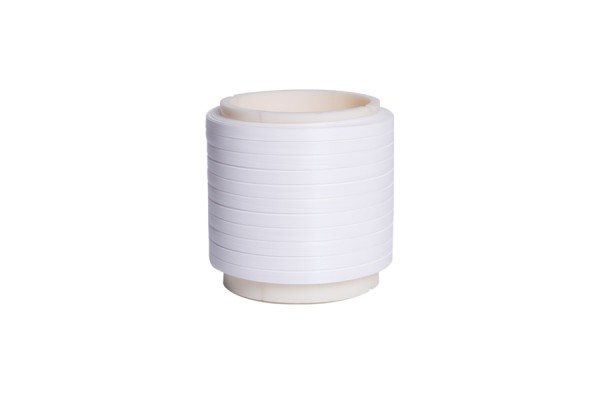
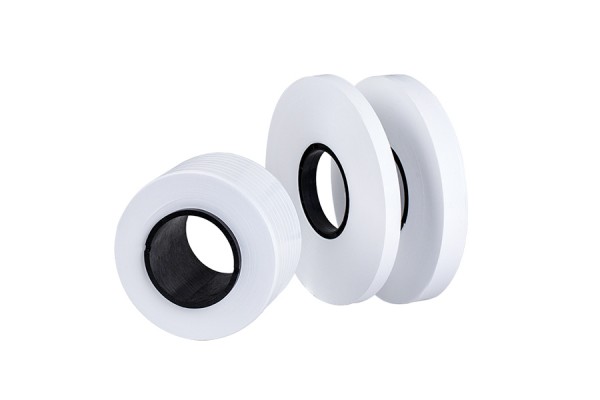
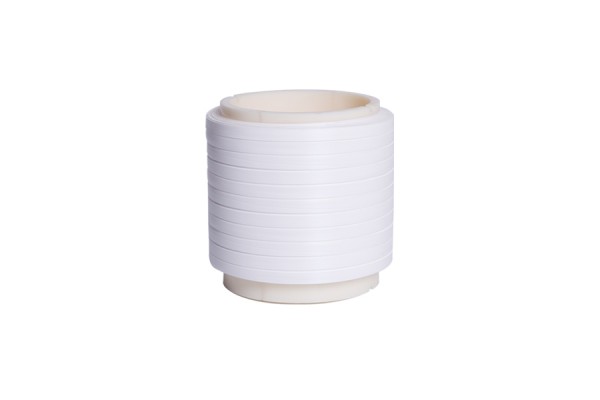
PTFE product names do not establish whether a material has this porous structure. Labels such as ‘High speed transmission line PTFE wrapping tape’, ‘PTFE wrapping film’, ‘PTFE Thread Seal Tape’, ‘PTFE cable wrapping tape’, ‘PTFE cable roll coating’, ‘DAC high-speed cable wrapping film’, ‘AEC high-speed cable wrapping film’, ‘AOC high-speed cable wrapping film’, ‘ACC high-speed cable wrapping film’, and ‘High speed and high-frequency cable wrapping film’ describe intended uses or product categories rather than verified membrane properties.
Check the material specification for expansion, porosity, and permeability before treating a PTFE film or tape as a breathable membrane.
ePTFE Pore Structure
An ePTFE membrane contains a network of solid PTFE regions called nodes, joined by thin strands called fibrils. Stretching PTFE creates open spaces within this network. These connected pores form winding pathways through the membrane rather than straight, uniform holes.
Pore structure varies with processing conditions. Pore size, connectivity, and membrane thickness affect how easily air and water vapor move through the material.
| Structural feature | Effect on membrane behavior |
|---|---|
| Pore size distribution influences the narrow openings along each pathway. | Larger connected openings generally allow easier airflow but can reduce resistance to liquid water entry. |
| Porosity describes the share of membrane volume occupied by voids. | Higher porosity can support greater flow when those voids form connected pathways. |
| Tortuosity describes how indirect the pathways are. | More winding pathways generally increase resistance to gas transport. |
Water resistance depends on pore geometry and the water-repellent PTFE surface. Liquid water must overcome capillary resistance to enter the pores, while air and water vapor can travel through open pathways. A single average pore-size value therefore cannot fully describe membrane performance.
Air and Vapor Flow
An eptfe membrane contains connected pores that provide pathways for gases. Air moves through these pathways when a pressure difference exists across the membrane. Flow depends on pore size, the proportion of open space, membrane thickness, and how winding the pathways are. Narrower or longer routes create more resistance.
Water vapor can diffuse through the same pore network, driven by differences in water vapor partial pressure. In clothing, warm, humid conditions near the skin often encourage vapor to move toward cooler, drier surroundings. High humidity outside reduces that driving force, so moisture may escape more slowly.
Air permeability and water vapor transmission measure different properties. A membrane can allow useful vapor transfer while restricting bulk airflow, especially when coatings, adhesives, or backing fabrics add resistance. These layers affect the performance of the finished material. Liquid water behaves differently because entering the pores requires overcoming a pressure barrier created by their size and water-repellent surfaces.
Why water stays out
an ePTFE membrane resists liquid water because its pore surfaces repel water. This property, called hydrophobicity, works with water’s surface tension to prevent liquid from entering the pores under low pressure. Water forms a curved surface at each pore entrance, and pressure must overcome this barrier before the liquid can pass through.
Water vapor can move through the air-filled pores without forcing a liquid surface through them. The difference is therefore not simply that droplets are larger than the pores. Liquid water can deform, and enough pressure can push it into the membrane.
The pressure required for entry depends on pore size, surface chemistry, and the liquid’s surface tension. Smaller pore openings generally resist higher water pressure, although the largest connected pores or defects can determine where leakage begins. Oils, detergents, and other contaminants may weaken this resistance by changing how water wets the surface or by lowering its surface tension.
Pore size tradeoffs
pore size affects how easily an eptfe membrane passes air and resists liquid water. Larger connected pores generally allow more airflow at a given pressure difference, but they can also let water enter at lower pressure. Smaller pore openings usually increase water entry pressure when the surface remains water-repellent.
Water vapor transport depends on more than pore size. Total porosity, membrane thickness, and the length and winding shape of pore pathways also affect resistance to vapor movement. A membrane with smaller pores can still pass vapor effectively if it has enough connected open space and a short transport path. Actual moisture transfer also depends on the vapor pressure difference across the membrane.
Pore size distribution matters as much as the average. A few large connected pores or defects can reduce water resistance even when most pores are small. Membrane selection therefore requires airflow, vapor transmission, and water entry pressure results measured under conditions relevant to the intended use.
Air and Water Tests
An ePTFE membrane needs separate tests for air flow, water vapor transport, and liquid water resistance. Each measures a different aspect of its pore structure.
Air permeability testing measures how much air passes through a defined area under a set pressure difference. Water vapor transmission testing measures moisture transfer under controlled temperature and humidity conditions. A membrane can allow vapor transport while showing limited bulk air flow, especially when coatings or backing layers are present.
Hydrostatic pressure testing raises water pressure against the membrane until penetration occurs. The result depends on pore size, surface wettability, defects, and test conditions. Larger connected pores or local damage can allow water through at lower pressures.
Results are comparable only when test methods, conditions, and units match. Testing the finished laminate also matters because adhesives and support fabrics can restrict transport. Repeating tests after flexing, abrasion, or relevant contaminant exposure helps show whether performance holds up during use.
Why membranes fail
an eptfe membrane can lose water resistance when its pores become wetted, damaged, or exposed to pressure above its water-entry limit. Oils and surfactants can make the pore surfaces easier to wet, allowing liquid to enter at lower pressure. Abrasion, punctures, or excessive stretching can create larger openings that bypass the original pore structure.
Breathability can also decline without a leak. Dust, salts, and other deposits can block airflow paths. In layered products, a water-soaked outer fabric adds resistance to vapor transfer, even when the membrane remains intact. Condensation can then collect on the inner surface if moisture arrives faster than it can escape.
Leaks may also occur at seams, seals, or bonded edges rather than through the membrane itself. Checking these areas alongside the membrane helps distinguish structural damage from contamination or condensation. Cleaning should follow the product’s instructions because unsuitable cleaners can leave wetting residues or damage surrounding layers.
Conclusion
an eptfe membrane allows air and water vapor to move through connected pores, while its water-repellent surfaces resist liquid water entry. Airflow requires a pressure difference, and vapor diffusion depends on a water vapor partial pressure difference. Liquid water enters when applied pressure exceeds the barrier set by pore geometry, surface wettability, and the liquid’s surface tension.
Pore size alone cannot predict performance. Pore connectivity, membrane thickness, and supporting layers also affect transport. Larger connected openings generally improve airflow but can lower water entry pressure. Contamination and damage can weaken water resistance, while blocked pores can reduce breathability without causing a leak.
Membrane selection should therefore rely on separate airflow, vapor transmission, and water resistance tests under relevant conditions. Testing the finished material after wear or contaminant exposure gives a more useful picture of performance than an average pore-size value alone.
FAQs
How does an eptfe membrane resist water while allowing vapor through?
Its connected pores carry water vapor, while water-repellent pore surfaces create a pressure barrier against liquid water entry.
Does breathability mean air passes through freely?
No. Water vapor transmission and air permeability are different properties. Coatings and backing layers can restrict bulk airflow while allowing vapor transfer.
Do smaller pores always improve membrane performance?
Smaller openings generally increase water entry pressure, but they can reduce airflow. Vapor transport also depends on thickness, porosity, and pore connectivity.
Can high humidity reduce breathability?
Yes. When the water vapor partial pressure difference across the membrane decreases, vapor diffusion slows.
Why can an intact membrane feel wet inside?
Moisture can condense inside when it accumulates faster than it escapes. This does not necessarily indicate a leak.
Can detergent residues affect water resistance?
Yes. Surfactants can lower water’s surface tension and promote pore wetting, reducing resistance to liquid entry.
Which tests should guide membrane selection?
Compare air permeability, water vapor transmission, and hydrostatic pressure results under matching test conditions. Finished-laminate testing accounts for supporting layers and adhesives.