

important Takeaways
The use of high-speed transmission line PTFE wrapping tape provides essential advantages that contribute to improved data transmission performance. Its unique properties, including low dielectric loss and excellent insulation, are vital for maintaining signal integrity in high-speed applications. Furthermore, the tape’s resistance to extreme temperatures and chemicals ensures reliable performance across diverse environments. Organizations leveraging PTFE wrapping tape can significantly reduce signal loss and minimize crosstalk, leading to clearer and more stable communication between devices. The application of these tapes is transforming industries reliant on high-speed data transfer, particularly in telecommunications and aerospace sectors. As technology continues to evolve, adopting PTFE solutions becomes increasingly important for achieving high performance in demanding transmission line environments. The enhancements offered by PTFE wrapping tape promote greater efficiency and reliability in data systems, making it an indispensable component for modern communication infrastructures.
Benefits of PTFE in High-Speed Transmission
The use of PTFE in high-speed transmission line applications offers essential advantages that improve performance in demanding environments. High-speed transmission line PTFE wrapping tape provides excellent insulation and low dielectric loss, which helps maintain signal integrity even at elevated frequencies. This quality is particularly beneficial for minimizing the degradation of high-frequency signals, ensuring reliable communication across diverse electronic devices. also, PTFE wrapping film demonstrates strong chemical resistance and thermal stability, which allows it to operate effectively under extreme conditions, ranging from low to high temperatures. The flexibility of PTFE cable wrapping tape also facilitates easy application on various cable types, ensuring a snug fit that reduces the potential for crosstalk and impedance fluctuations. As a result, the durability and reliability of data transmission systems significantly improve, reflecting the useful role of PTFE in modern communication technology. Companies increasingly adopt products such as DAC high-speed cable wrapping film and AEC high-speed cable wrapping film to address the growing demands for efficient data transfer while maintaining stability in complex electrical environments.
High-Speed Cable Signal Integrity
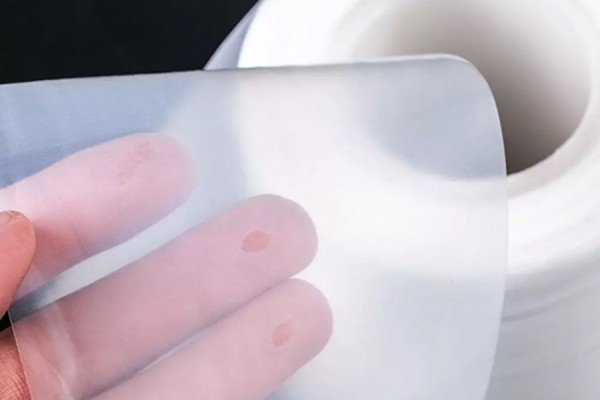
Ensuring signal integrity in high-speed cables is essential for maintaining performance in data transmission. High-speed transmission line PTFE wrapping tape significantly contributes to this integrity by minimizing the factors that can lead to signal degradation. The combination of low dielectric loss and excellent insulation properties inherent in PTFE helps reduce the risk of crosstalk and interference. Effective insulation allows for more reliable transmission across various frequencies, which is key in demanding applications such as telecommunications, data centers, and aerospace systems. The stable temperature range of PTFE wrapping tape also plays a vital role, as it maintains consistent dielectric properties even under varying environmental conditions. furthermore, rigorous dimension control during the manufacturing process ensures that impedance remains uniform across rolls, promoting enhanced signal reliability. Using high-quality PTFE materials reinforces the ability to handle rapid data throughput without compromising the integrity of the transmitted signals.
Reducing signal loss with PTFE Wrap
PTFE wrapping tape plays a vital role in minimizing signal loss within high-speed transmission lines. The unique high-speed cable wrapping properties of PTFE are essential for maintaining signal integrity during data transmission. Its low molecular polarity significantly reduces high-frequency signal polarization loss, which is key in environments demanding reliable performance. also, PTFE’s stable density of 0.8±0.1g/cm ensures consistent dielectric characteristics, which further mitigates signal degradation caused by temperature fluctuations or mechanical stress. By creating a smooth dielectric layer, PTFE wrapping tape minimizes reflectance and insertion loss, allowing for clearer data signals to be transmitted over long distances. This optimization is critical in applications ranging from telecommunications to aerospace, where minimal signal distortion can affect overall performance and reliability in systems that rely on rapid data exchange. Through these attributes, PTFE wrap provides an effective solution for reducing signal loss and enhancing the operational efficiency of high-speed transmission lines.
Applications of PTFE in Data Transmission
PTFE wrapping tape is essential in various sectors where data transmission reliability is critical. This tape is particularly effective in high-speed transmission lines, as it provides excellent insulation while minimizing signal loss. In telecommunications, PTFE wraps are utilized in coaxial cables and fiber optics, ensuring signals maintain their integrity over long distances. The aerospace industry also benefits from PTFE, as the material withstands extreme conditions without compromising cable performance. also, PTFE’s low dielectric loss makes it helpful in medical applications where precision and reliability are paramount. Emerging technologies that demand rapid data rates increasingly incorporate PTFE wrapping tape, thereby enhancing overall system performance. This versatile material meets diverse demands across various applications, demonstrating its importance in facilitating stable and efficient data transmission under challenging conditions.
Understanding crosstalk in Transmission Lines
Crosstalk occurs when signals from one transmission line interfere with signals in another, leading to unwanted noise and degraded signal integrity. This phenomenon is particularly problematic in high-speed data transmission, where the rapid flow of information increases the likelihood of interference. Factors contributing to crosstalk include physical proximity of cables, variations in insulation quality, and the design of transmission systems. The use of high-speed transmission line PTFE wrapping tape can significantly mitigate these effects. This tape provides excellent insulation properties, minimizing electrical coupling between adjacent lines. By maintaining a consistent dielectric environment, PTFE wrapping tape reduces the risk of signal distortion caused by crosstalk. furthermore, its low molecular polarity enhances performance by ensuring stable signal propagation. As technology advances and data transmission speeds increase, understanding and managing crosstalk will remain essential for maintaining effective communication across various applications.
important Features of PTFE Wrapping Tape
PTFE wrapping tape exhibits several important features that make it ideal for high-speed transmission lines. Its unidirectional porous structure contributes to low molecular polarity, which results in minimal polarization losses at high frequencies. This is particularly beneficial in maintaining signal integrity over long distances. furthermore, the tape offers excellent dielectric strength, capable of withstanding voltages of at least 80kV/mm, thus preventing signal distortion in high-voltage environments. The stringent dimensional tolerance of 0.1±0.01mm ensures uniformity across rolls, which is key for consistent wrap tension and overlap rates during installation. The optimized surface quality minimizes defects that could lead to impedance discontinuities. PTFE’s remarkable chemical resistance and thermal stability allow it to perform reliably in extreme conditions, ranging from -200℃ to 260℃. These characteristics collectively position PTFE wrapping tape as a reliable choice for preserving the performance and reliability of high-speed transmission lines in demanding applications like data centers and military communications.
Performance in Extreme Environments
High-speed transmission line PTFE wrapping tape performs exceptionally well in extreme environments. It maintains its integrity across a wide temperature range, operating effectively from -200℃ to 260℃. This adaptability ensures consistent dielectric performance even when subjected to harsh conditions, making it particularly suitable for applications in AI servers and data centers. The low molecular polarity of PTFE significantly reduces signal polarization loss, allowing for stable data transmission where fluctuating temperatures and humidity levels are common. In addition, the tape’s robust dielectric strength of ≥80kV/mm protects against potential signal distortions caused by high voltage fields. As electronic devices continue to demand increased speeds and reliability, PTFE wrapping tape proves key in mitigating issues associated with temperature and voltage extremes, thereby ensuring uninterrupted performance in high-stakes environments.
Improving data transmission reliability
high-speed transmission line PTFE wrapping tape significantly contributes to the stability and reliability of data transmission. Its unique properties, such as low dielectric loss and high dielectric strength, allow it to maintain signal integrity even in fluctuating temperature environments. By minimizing polarization loss due to its low molecular polarity, the tape ensures that signals remain clear and uninterrupted. furthermore, the uniform thickness of the wrapping aids in consistent wrap tension and overlap, which is key to avoiding impedance fluctuations. When used in demanding applications like AI servers and data centers, PTFE tape reduces crosstalk between adjacent lines, enhancing overall performance. Its durability in harsh conditions makes it indispensable in critical sectors such as telecommunications and aerospace. By implementing PTFE wrapping tape, organizations can significantly decrease signal degradation and bolster compliance with rigorous data transmission standards.
Conclusion
the utilization of high-speed transmission line PTFE wrapping tape substantially elevates the performance of data transmission systems in demanding environments. By reducing signal loss and minimizing crosstalk, this original material ensures that communication remains reliable, even in situations characterized by high frequencies and variable conditions. The exceptional insulation properties of PTFE contribute significantly to maintaining signal integrity, while its resilience against harsh temperatures and chemical exposure ensures long-lasting reliability. As industries continue to advance in technology and data speed requirements grow, the role of PTFE wrapping tape becomes increasingly vital. Its ability to boost operational efficiency across various applications underscores its importance in modern communication technology. Organizations that adopt PTFE solutions are likely to experience more stable performance and reduced maintenance costs, reflecting a smart investment for the future of data transmission infrastructure.
FAQs
What is high-speed transmission line PTFE wrapping tape?
High-speed transmission line PTFE wrapping tape is a specialized material designed to improve signal integrity in data transmission applications by providing excellent insulation and minimizing signal loss.
How does PTFE wrapping tape reduce signal loss?
PTFE wrapping tape reduces signal loss by exhibiting low dielectric loss, which helps maintain strong signal quality even at high frequencies and in challenging environmental conditions.
What are the primary benefits of using PTFE in transmission lines?
The primary benefits include enhanced insulation properties, strong chemical resistance, thermal stability, and flexibility, which ensures reliable performance across various cable types.
In what industries is PTFE wrapping tape commonly used?
PTFE wrapping tape is commonly used in telecommunications, aerospace, medical devices, and data centers where high-speed data transfer and reliability are important.
How does PTFE wrapping tape help reduce crosstalk?
PTFE wrapping tape minimizes crosstalk by providing effective insulation that reduces electrical coupling between adjacent lines, thereby improving overall signal integrity.
What temperature range can PTFE wrapping tape withstand?
PTFE wrapping tape can effectively operate within a wide temperature range from -200℃ to 260℃, making it suitable for extreme environments.
Is PTFE environmentally friendly?
While PTFE itself is chemically stable and resistant to degradation, its environmental impact mainly concerns the manufacturing process. It is important to consider proper disposal methods for products containing PTFE.
Can PTFE wrapping tape be used in high-voltage applications?
Yes, PTFE wrapping tape has a dielectric strength capable of withstanding voltages of at least 80kV/mm, making it suitable for high-voltage environments.


